Ocala, Florida: A Homeowner's Guide
Horse country, springs and live oaks — and the weather, soil and trees that shape how homes here handle rain.
About the area
Ocala is the county seat of Marion County, in north Central Florida. It sits inland, roughly between the Gulf and Atlantic coasts, and is surrounded by rolling pasture, forest and springs. For city services, news and local resources, the official City of Ocala website is the best place to start.
This page is a short guide to the area from a homeowner's point of view: what makes Ocala distinctive, and how its climate, landscape and housing affect the outside of a home.
Local character
Horse country, springs and history
Ocala is widely known for its thoroughbred horse farms, and the area's horse industry is a big part of its identity — the city promotes itself as the "Horse Capital of the World." Drive outside town and you'll see miles of fenced pasture, barns and large oak trees.
Just east of the city is Silver Springs, one of Florida's best-known springs and long famous for its glass-bottom boat tours; it is now a state park. Farther east lies the Ocala National Forest, a large area of pine scrub, lakes and springs. The city's history reaches back to Fort King, a U.S. Army post established in the 1820s, and Ocala's downtown and nearby historic districts still include many older homes and buildings.
Homes
Neighborhoods and housing
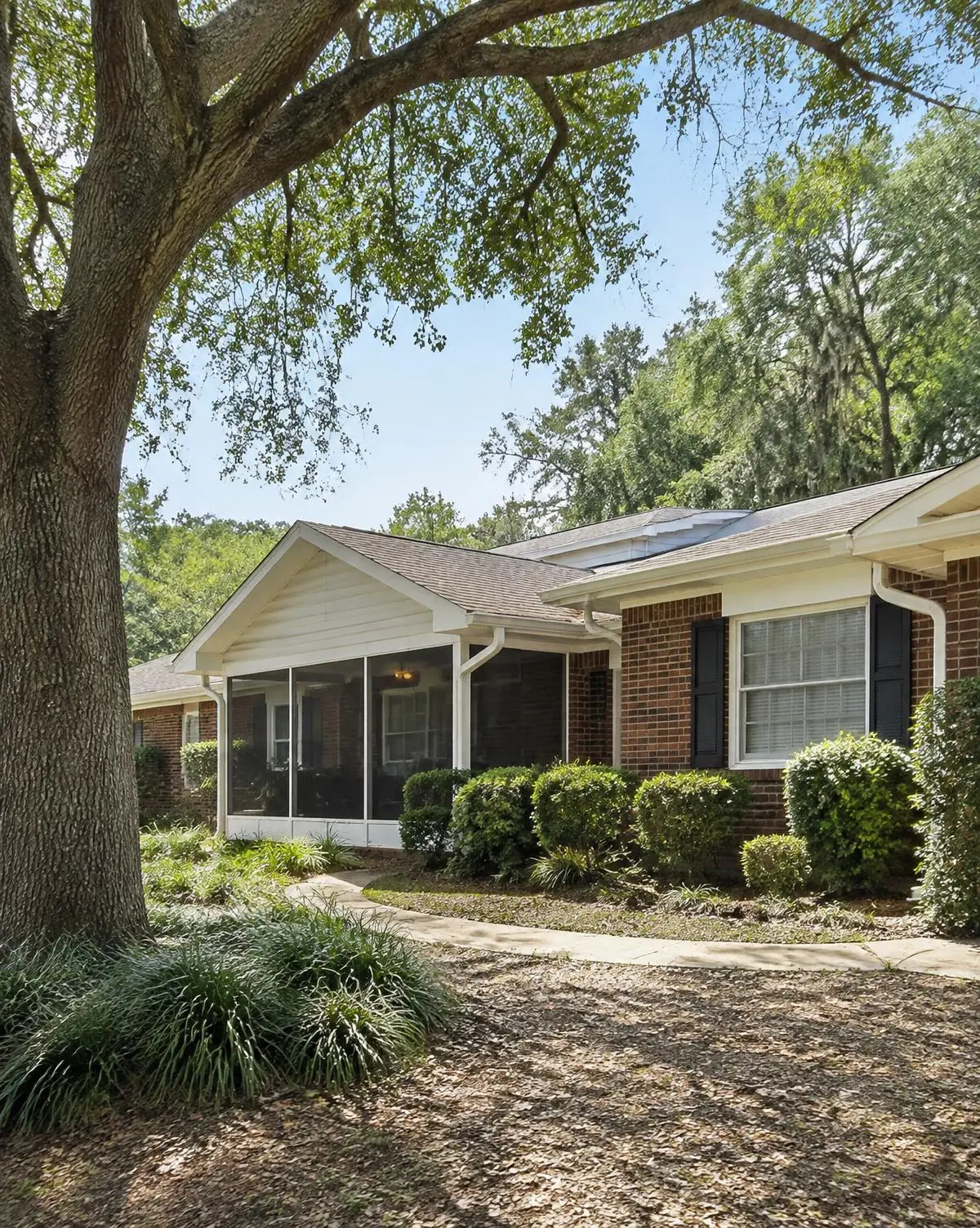
Ocala's housing is varied. Close to downtown you'll find older homes, some with wood trim, porches and mature trees shading the roof. Many neighborhoods built in later decades feature single-story concrete-block homes with stucco exteriors, a common style throughout Central Florida. Newer subdivisions and planned communities around the city add more recent construction, and the wider area also includes rural properties and small farms on larger lots.
Each of these brings different exterior considerations. Older homes may have original wood fascia that has weathered over the years. Stucco homes benefit from keeping roof runoff away from walls and foundations. Larger lots can have long stretches of yard where water needs somewhere to go.
Weather
Seasonal rainfall and summer thunderstorms
Like much of Central Florida, Ocala has a humid subtropical climate with a distinct wet season. A large share of the year's rain usually falls from late spring through summer, when warm, moist air fuels frequent afternoon thunderstorms. These storms can be brief but intense, sometimes dropping a lot of rain in under an hour, along with gusty wind and lightning. The cooler months are generally drier.
Atlantic hurricane season runs from June 1 through November 30. Because Ocala is inland, it is typically less exposed than the coasts, but tropical storms can still bring prolonged heavy rain and wind to the area.
Landscape
Runoff, sandy soils and drainage
Much of Marion County sits on sandy soils over limestone, the same geology that feeds the region's springs. Sandy soil often drains quickly, but during a downpour, water pouring off a roof edge can still carve channels in mulch beds, wash out sand and collect in low spots. Areas next to the foundation, walkways and driveways are where homeowners most often notice puddling or erosion.
Practical steps include making sure downspouts discharge away from the house, keeping grading sloped away from the foundation, and, where water has nowhere to go, considering underground drainage to carry it farther away.
Because the region's water supply comes from the Floridan Aquifer beneath it, many local residents also take an interest in how stormwater moves across their property and into the ground.
Trees
Live oaks, pines and year-round debris
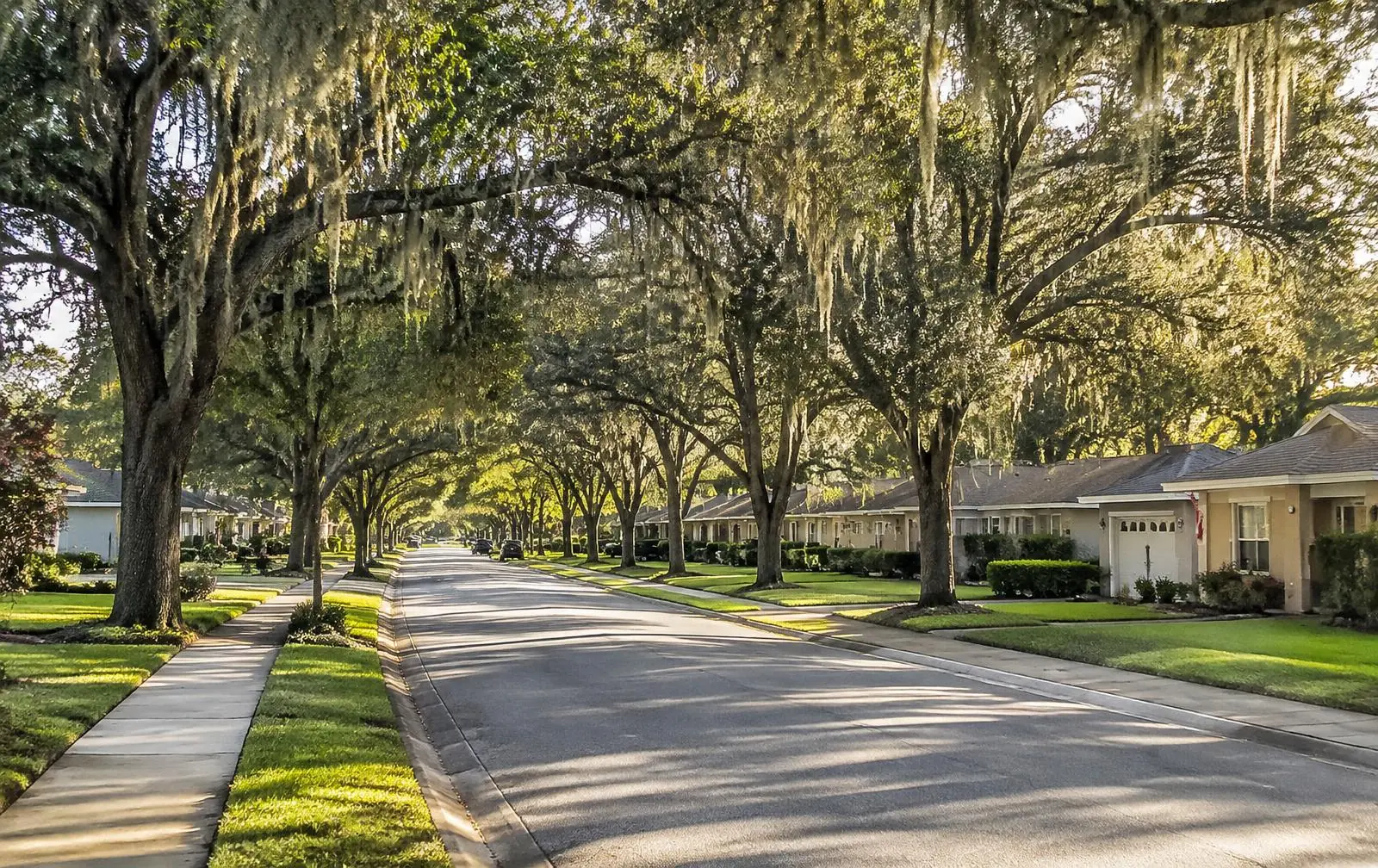
Ocala's tree canopy is one of its most attractive features. Southern live oaks draped in Spanish moss, laurel and water oaks, magnolias and several types of pine are common in yards and along streets. They also shed leaves, needles, acorns, pollen and moss onto roofs throughout the year — live oaks, for instance, tend to drop many of their leaves in spring as new growth comes in.
Oak leaves & acorns
Collect in gutters and at downspout openings, especially in spring.
Pine needles
Thin needles can mat together and slow water flow.
Spanish moss
Blows onto roofs and can catch other debris.
Overhanging limbs
Shade the roof and keep debris and moisture on it longer.
Home care
Exterior maintenance in Ocala's environment
Heat, humidity, strong sun and frequent rain all take a toll on a home's exterior. A few habits help:
- Check gutters and downspouts before the summer rainy season and after major storms.
- Look for overflowing water, dripping seams or sections pulling away from the roofline.
- Watch the fascia and soffit for peeling paint, soft spots or stains that may signal moisture.
- Notice where water collects in the yard after a heavy afternoon storm.
- Trim limbs that hang over the roof where practical.
If you'd like a second set of eyes, you can learn more on the Ocala Gutters homepage or find us on our Google Business Profile.
Questions about water around your Ocala home?
Free · No obligation
Request Your Free Estimate
Tell us about your home and a Gutter Professional will be in touch.
Free estimates · Open 7 days
Your free gutter estimate starts with one call.
Speak with Ocala Gutters about installation, repair, replacement, gutter guards, soffit and fascia, or drainage.